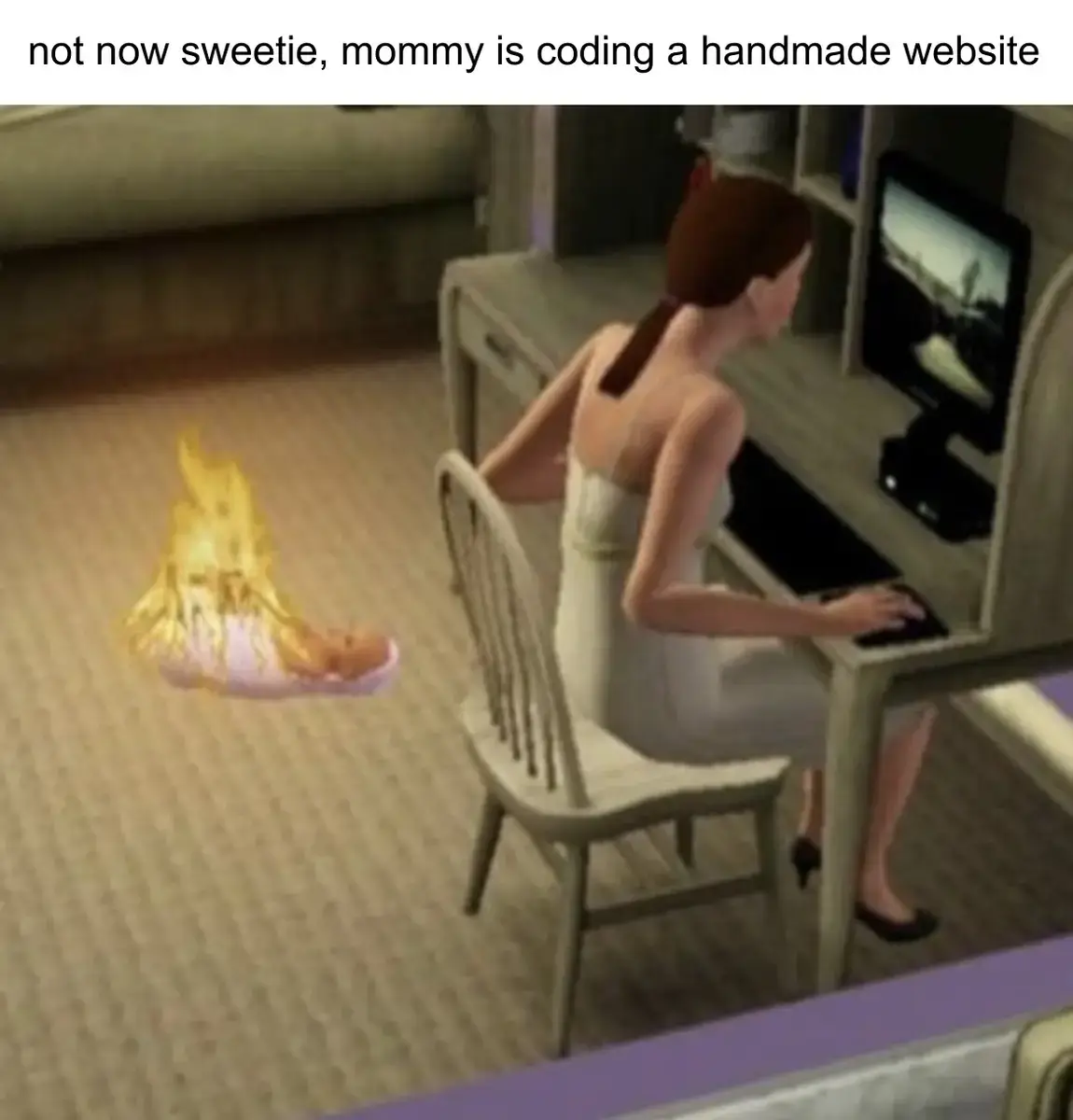
Prior to this version of the site, I used to have a Webflow, corner-radius-crowded, trendy, shiny, mobile-first, site. But then, I came across Carpenter's article on handmade web, and -sorry my drama- something clicked. I had been using my very own site as an advertisement of myself and not as a personal home where to store and take care of digital little projects and rooms. Why treat my place on the internet as yet another market driven outlet?
This new iteration is meant to be an imperfect work in progress, created and owned by me. Here's some of the thoughts, articles and books that inspired me to do take this path.
Planted: Jan 31, 2026. Last tended:
in the presence of
beautiful buildings and bustling courtyards.
A sense that these spaces
are inviting you to slow down,
deepen your attention, and be
a bit more human.
What if our software could do the same?

Handmade Web
The term 'handmade' usually refers to objects made by hand or by using simple tools rather than machines. The result may be homely — as in a child's clay ashtray — or exquisite — as in a pair of bespoke brogues. I evoke the term 'handmade web' to refer to web pages coded by hand rather than by software; web pages made and maintained by individuals rather than by businesses or corporations; web pages which are provisional, temporary, or one-of-a-kind; web pages which challenge conventions of reading, writing, design, ownership, privacy, security, or identity.
A Handmade Web, by J. R. Carpenter (2016)A.k.a. the bible of handmade web movement.
Permacomputing
Permacomputing is both a concept and a community of practice oriented around issues of resilience and regenerativity in computer and network technology inspired by permaculture. oeriginally coined by viznut in 2020.More about Permacomputing here.
Beautiful piece about creating a personal space on the web.
Elizabeth Goodspeed on the limits of imperfection as a design strategy.
Poetic Web
The Poetic Web is a practice and process towards a place: a web that is more handmade, expressive, and intimate; where site-making is a political, personal, and poetic act.Concept from Chia Amisola.
The web's grain, by Frabk Chimero (2015)